Authored & designed by Katherine Walden // Powered by Jupyter Book
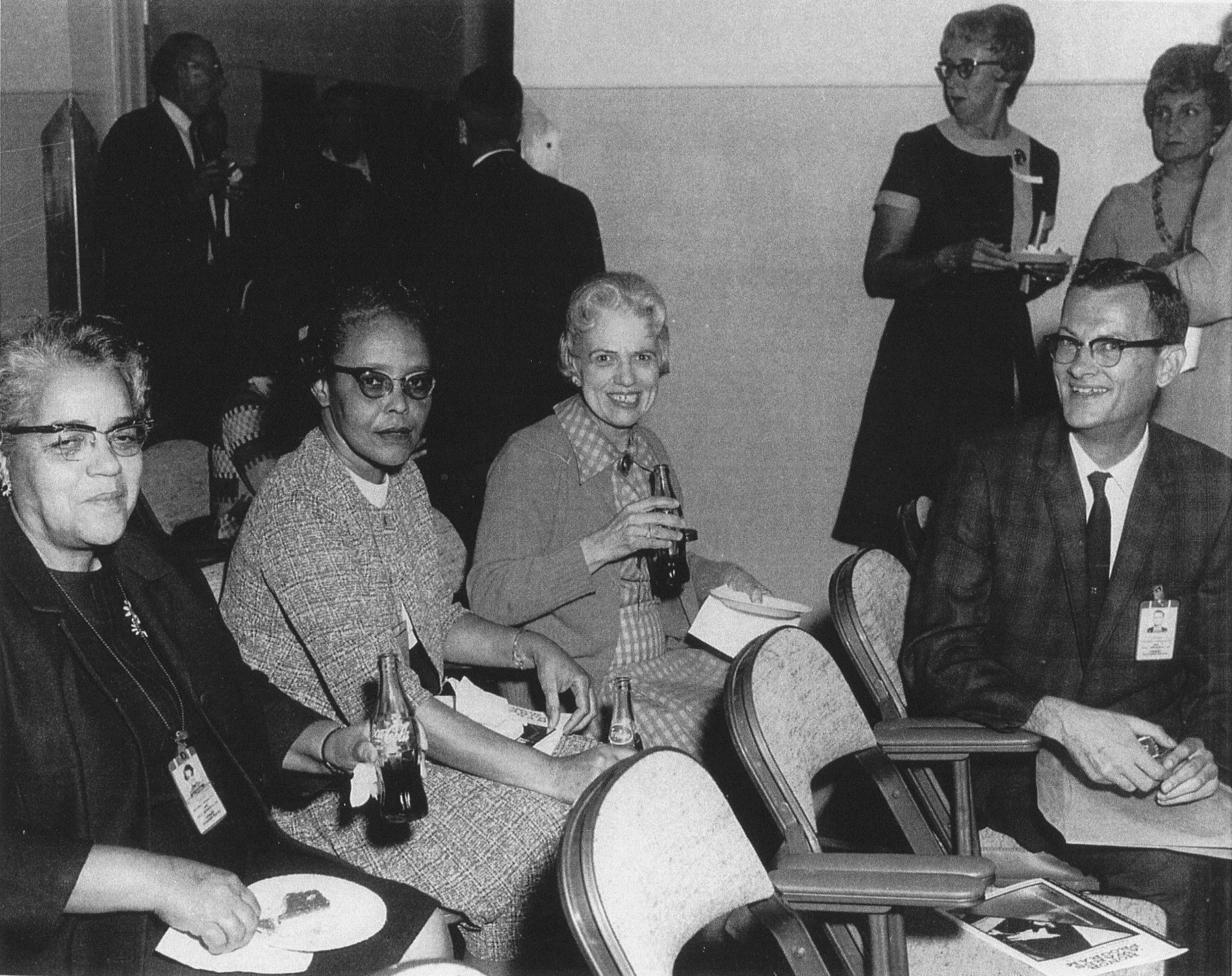
L-R: Dorothy Vaughan, Lessie Hunter, Vivian Adair (Margaret Ridenhour and Charlotte Craidon in back) Human Computers: photo donated by B. Golemba (Wikimedia Commons).
This site hosts instructional materials for the University of Notre Dame’s “Code in Context: Computing & the Liberal Arts” course, a newly-designed course offering that combines hands-on introduction to the basic concepts and technologies of computing with critical discussion of the historical, social, and cultural dimensions of computing, data, and digital technology. The work of the course includes discussions of content that foregrounds the cultural, social, and historical dimensions of computing technologies along with exploration and foundational skill building with various computing tools and methods.
This course is part of the College of Arts and Letters Technology & Digital Studies Program. Visit the “Course Overview” chapter for additional information about the course.
Adaptation & Reuse
 This book is licensed under a Creative Commons BY-NC-SA 4.0 License.
This material is licensed under a CC BY-NC-SA license. This license enables reusers to distribute, remix, adapt, and build upon the material in any medium or format for noncommercial purposes only, and only so long as attribution is given to the creator. If you remix, adapt, or build upon the material, you must license the modified material under identical terms.
Suggested Citation
Katherine Walden, Code in Context: Computing & the Liberal Arts, Version 1 (2024), DOI PLACEHOLDEr.
Getting Started
The How-To page is a good place to start in terms of how to use this book.
Use the table of contents below or the menu on the left-hand side of the page to get started.
Contents
Acknowledgments
Chapter-specific acknowledgements are included in the relevant sections.
The larger course framework draws on the teaching practice and instructional resources of a fabulous group of folks (in no particular order): Dr. Samuel Rebelsky, Dr. Janet Davis, Dr. Liz Rodrigues, Dr. Lindsay K. Mattock, Dr. Miriam Posner, Dr. Anelise Hanson-Shout, Dr. David Eichmann, Megan Adams, Jarren Santos, Ben Chiewphasa.
Making these teaching resource available via Jupyter Book takes inspiration from Melanie Walsh’s Introduction to Cultural Analytics & Python textbook.