In addition to lists, Python includes two other data structures that function as linear arrays.
Tuples
“Tuples are used to store multiple items in a single variable...A tuple is a collection which is ordered and unchangeable. Tuples are written with round brackets...and allow duplicate values” (W3Schools, Python Tuples)
Python Examples
We can create a tuple in Python using the round bracket syntax (()) or the tuple() method.
# creating a tuple using round brackets
sample = ("apple", "banana", "blueberry")

# checking data type
type(sample)
# creating tuple using tuple method
sample = tuple(("apple", "banana", "blueberry"))
# check data type
type(sample)Tuple Methods
Some of the methods we’ve already seen for lists and strings can also be used with tuples.
# return number of items in tuple
len(sample)

# access first item in tuple
sample[0]

# count number of times specific value appears in  tuple
sample.count("apple")

# return index for specific value
sample.index("pear")Sets
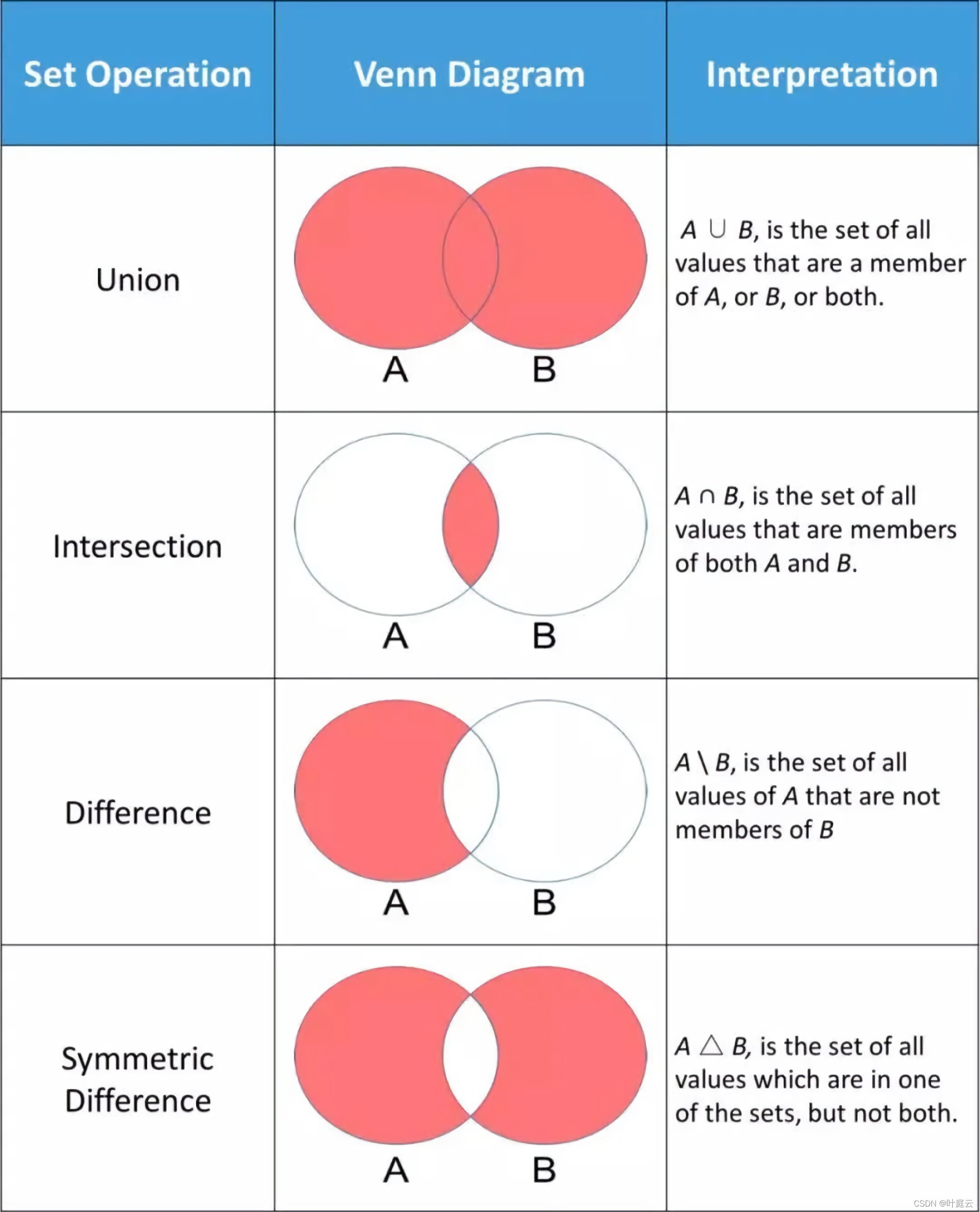
A set is an unordered collection of unique objects. Sets are primarily used to see if an object or value is in the collection (membership). Python supports a number of set operations, but one of the primary uses is to test for membership.
Python Examples
We can use the in operator to test for membership with a set.
# create a set
s = set([0,1,2])

# show set values
s

# test if 0 is in s
0 in s # returns true

# test if 7 is in s
7 in s # returns false
Set Methods
We can add items to our set using .add() or remove them using .remove().
# add values to set
s.add(3)
s.add(4)
s.add(5)

# show new set with values
s
# remove 1 number value from set
s.remove(5)
# show updated set
s