
ALU & Memory#
Lecture#
 |
ALU & Memory |
Key Concepts#
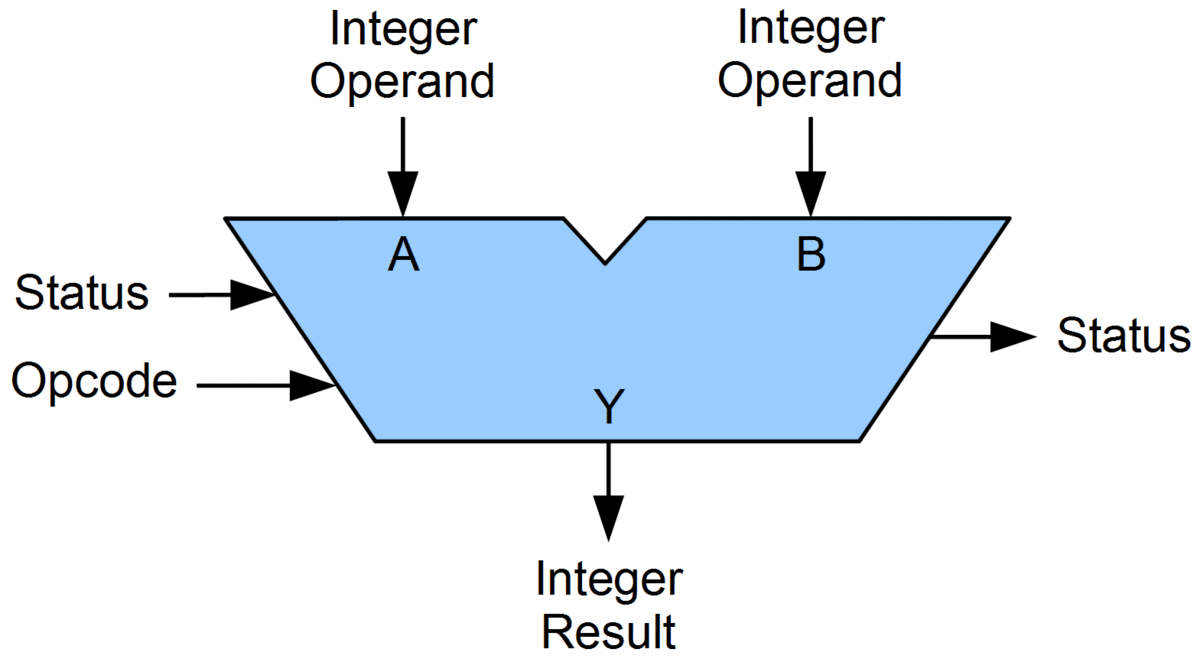
Arithmetic Logic Unit
“An arithmetic logic unit (ALU) is a combinational digital electronic circuit that performs arithmetic and bitwise operations on integer binary numbers” (Wikipedia)
Memory
“In computing, memory refers to a device that is used to store information for immediate use in a computer or related computer hardware device” (Wikipedia)
Registers
“In computer architecture, a processor register is a quickly accessible location available to a computer’s central processing unit (CPU). Registers usually consist of a small amount of fast storage” (Wikpedia)
Random Access Memory (RAM)
“Random-access memory (RAM) is a form of computer memory that can be read and changed in any order, typically used to store working data and machine code” (Wikipedia)
RAM is controlled by the CPU and can include data and instructions
Persistent Memory
Physical storage (magnetic disks, solid state disks, magnetic tape, etc) that retains information even when the device is powered off
Comprehension Check#
 |
ALU & Memory Comprehension Check |
Application#
Q1: What types of inputs does the ALU accept? Or, what kind of data can be passed to the ALU?
Q2: What are some of the differences between RAM and persistent memory?